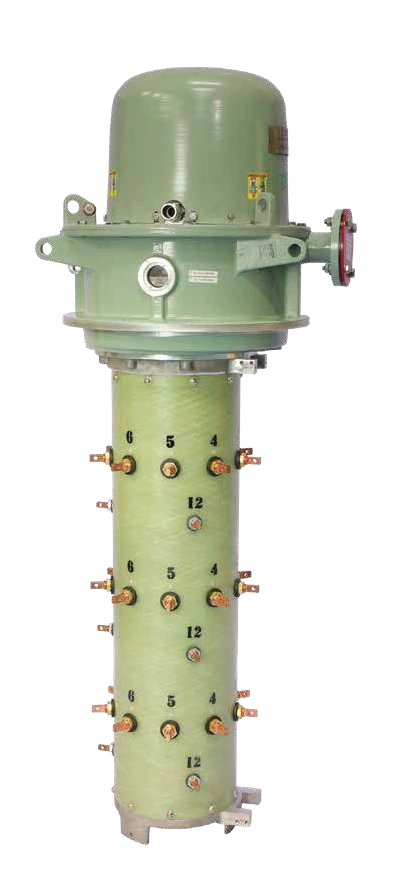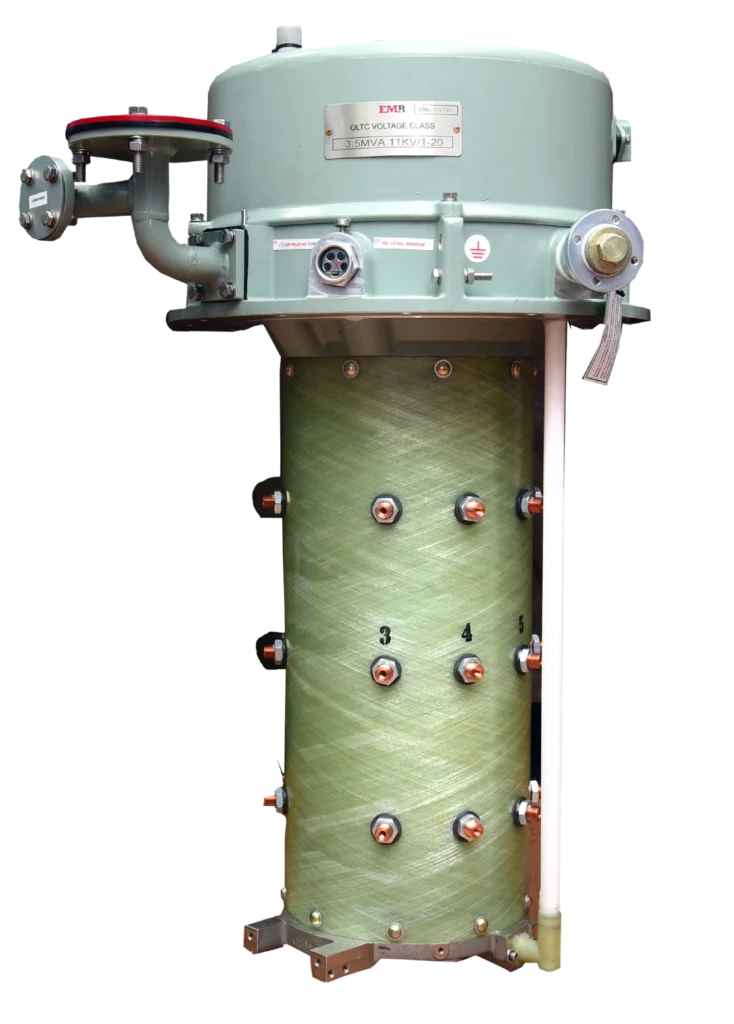
The on-load tap changer (OLTC) is the only part of a power transformer with moving contacts that switch under load. Every tap operation draws an arc, and every arc leaves something behind in the oil. Over time, those residues determine whether your tap changer operates reliably for decades or fails in service.
OLTC oil filtration is the maintenance process that removes these by-products before they cause damage. Yet it is one of the most misunderstood parts of transformer upkeep. Teams often wait for a shutdown, or skip it entirely, assuming the oil “looks fine.” This guide explains why tap changer oil degrades faster than main tank oil, how to identify contamination early, and when on-line filtration makes more sense than off-line filtration.
Why OLTC oil is different from main tank oil
It is important to distinguish between the two oil systems inside a transformer.
The main tank oil provides insulation and cools the windings. It operates in a relatively stable environment and degrades slowly, mainly through thermal ageing and moisture ingress.
The diverter (or selector) compartment oil in the tap changer operates a much harsher life. Each switching operation produces an electrical arc that:
- Breaks down the oil, releasing carbon particles and dissolved gases
- Raises the local temperature sharply for a fraction of a second
- Erodes the transition and main contacts, adding metallic particles to the oil
Because the arcing is a normal and intended part of tap changer operation, contamination is not a fault it is expected. The question is never whether the oil will degrade, but how quickly it will degrade and when maintenance should be performed.
This is exactly why OLTC oil should be treated on its own service schedule, independent of the main tank.
What contaminated tap changer oil does to your transformer
Left unfiltered, degraded OLTC oil creates a chain of problems:
Carbon build-up bridges insulation gaps. Suspended carbon lowers the dielectric strength of the oil. In a compartment where contacts switch under high voltage, reduced dielectric strength raises the risk of flashover.
Metallic particles accelerate contact wear. Abrasive particles circulating in the oil act like grit, wearing contacts faster and raising contact resistance the very parameter you are trying to protect.
Moisture attacks insulation life. Moisture enters through the breather and ageing seals. Combined with heat, it hydrolyses the oil and degrades the solid insulation, which does not recover once damaged.
Sludge restricts movement and cooling. As oxidation advances, sludge forms and coats contacts, mechanisms, and cooling surfaces, interfering with smooth tap changer operation.
The result is higher contact resistance, increased heat generation, and faster ageing a self-reinforcing cycle that can ultimately lead to unplanned outages and expensive repairs.
Warning signs it’s time to filter OLTC oil
You rarely get one dramatic signal. Instead, watch for a combination of the following indicators:
- Rising contact resistance measured through DCRM testing the clearest early warning of contact and oil degradation
- Falling dielectric breakdown voltage (BDV) in oil sample tests
- High moisture content in the tap changer oil
- Dark, cloudy oil with visible carbon on sampling
- A high number of tap operations since the last service many OLTCs are rated by operation count
- Abnormal dissolved gas trends specific to the tap changer compartment
No single reading tells the whole story. Combining oil analysis with DCRM data produces a much more reliable indication of when filtration is genuinely needed, rather than filtering too early (which wastes time and resources) or too late (which can lead to equipment damage).
On-line vs off-line OLTC oil filtration
Once you know filtration is due, the next decision is how to carry it out. There are two approaches, and they solve different problems.
Off-line filtration
Off-line filtration is done during a planned outage. The transformer is de-energised, and the tap changer oil is drained, filtered or replaced, and then refilled as part of a broader service.
Best suited to:
- Major periodic maintenance and overhauls
- Cases where oil is already heavily degraded and needs full replacement
- Situations where the contacts also need inspection or the unit needs a retrofit
Trade-off: It is thorough, but it requires taking the transformer out of service, resulting in lost availability and the need to schedule an outage.
On-line filtration
On-line filtration uses a continuously connected filtration unit that circulates and cleans the tap changer oil while the transformer stays in service. Modern on-line oil filtration units remove particles, carbon, and moisture in real time, keeping oil quality within limits between major services.
Best suited to:
- Transformers with a high operation count where oil degrades quickly
- Critical assets where outages are costly or hard to schedule
- Utilities and industries moving toward condition-based rather than time-based maintenance
Trade-off: It involves an upfront investment in the filtration unit, but it typically pays back through extended oil life, fewer forced outages, and slower contact wear.
EMR’s On-line Oil Filtration Unit for OLTCs is built for exactly this role: continuous, in-service oil conditioning that protects the diverter contacts and keeps dielectric strength stable between overhauls.
Quick comparison
| Factor | Off-line filtration | On-line filtration |
| Transformer status | De-energised | Stays in service |
| When it’s used | Planned outages, overhauls | Continuous, between services |
| Best for | Heavy degradation, full oil change | High operation counts, critical assets |
| Downtime | Required | None |
| Maintenance model | Time-based | Condition-based |
For many operators the two are complementary: on-line filtration keeps oil healthy day to day, while off-line service handles deeper inspection and contact work during scheduled outages.
How often should you filter tap changer oil?
There is no single universal interval, because it depends on the number of tap operations, the OLTC design, loading condition, and the operating environment. That said, a practical approach looks like this:
- Track the operation count, not just calendar time. A tap changer switches many times a day ages faster than one that rarely moves.
- Periodically sample the oil and test its dielectric breakdown voltage (BDV) and moisture content.
- Trend DCRM results to identify rising contact resistance before it becomes critical.
- Filter when the data crosses your limits, not on a fixed date alone.
This condition-based approach avoids both extremes: unnecessary filtering that adds cost, and delayed filtration that allows damage to accumulate.
The bottom line
OLTC oil contamination is inevitable because arcing under load is how a tap changer does its job. What you can control is how quickly that contamination turns into damage. Regular oil analysis paired with DCRM testing tells you when to act, and the choice between on-line and off-line filtration tells you how. Combined with a healthy Smart Breather to keep moisture out in the first place, good filtration practice can add years of reliable service to both the tap changer and the transformer it protects.
If you’re not sure where your tap changer oil stands today, a diagnostic starting point is DCRM testing and an oil sample. From there, EMR’s transformer service team can recommend whether on-line filtration, an off-line service, or a retrofit is the right next step.
Frequently Asked Questions
Why does OLTC oil degrade faster than main tank oil? Because the tap changer switches contacts under load, every operation produces an electrical arc that releases carbon particles, gases, and metallic particles into the oil. The main tank oil has no arcing, so it ages far more slowly.
Can I filter tap changer oil without shutting down the transformer? Yes. An on-line oil filtration unit circulates and cleans the OLTC oil while the transformer stays energised and in service, removing particles and moisture continuously between major overhauls.
How do I know when OLTC oil needs filtering? Watch for rising contact resistance in DCRM testing, falling dielectric breakdown voltage (BDV), high moisture, dark or cloudy oil, and a high number of tap operations since the last service. A combination of these, not a single reading, is the reliable trigger.
Is on-line filtration better than off-line filtration? They serve different purposes. On-line filtration is best for keeping oil healthy continuously on high-duty or critical transformers, while off-line filtration suits planned overhauls and full oil replacement when degradation is already advanced. Many operators use both.
Does oil filtration replace tap changer maintenance? No. Oil Filtration protects and extends oil life, but the tap changer still needs periodic inspection, contact checks, and diagnostic testing such as DCRM as part of a complete maintenance program.