DYNAMIC
CONTACT
RESISTANCE
MEASUREMENT
DYNAMIC CONTACT RESISTANCE MEASUREMENT
WHY Dynamic Contact Resistance measurement (DCRM)?
Request for Brochure
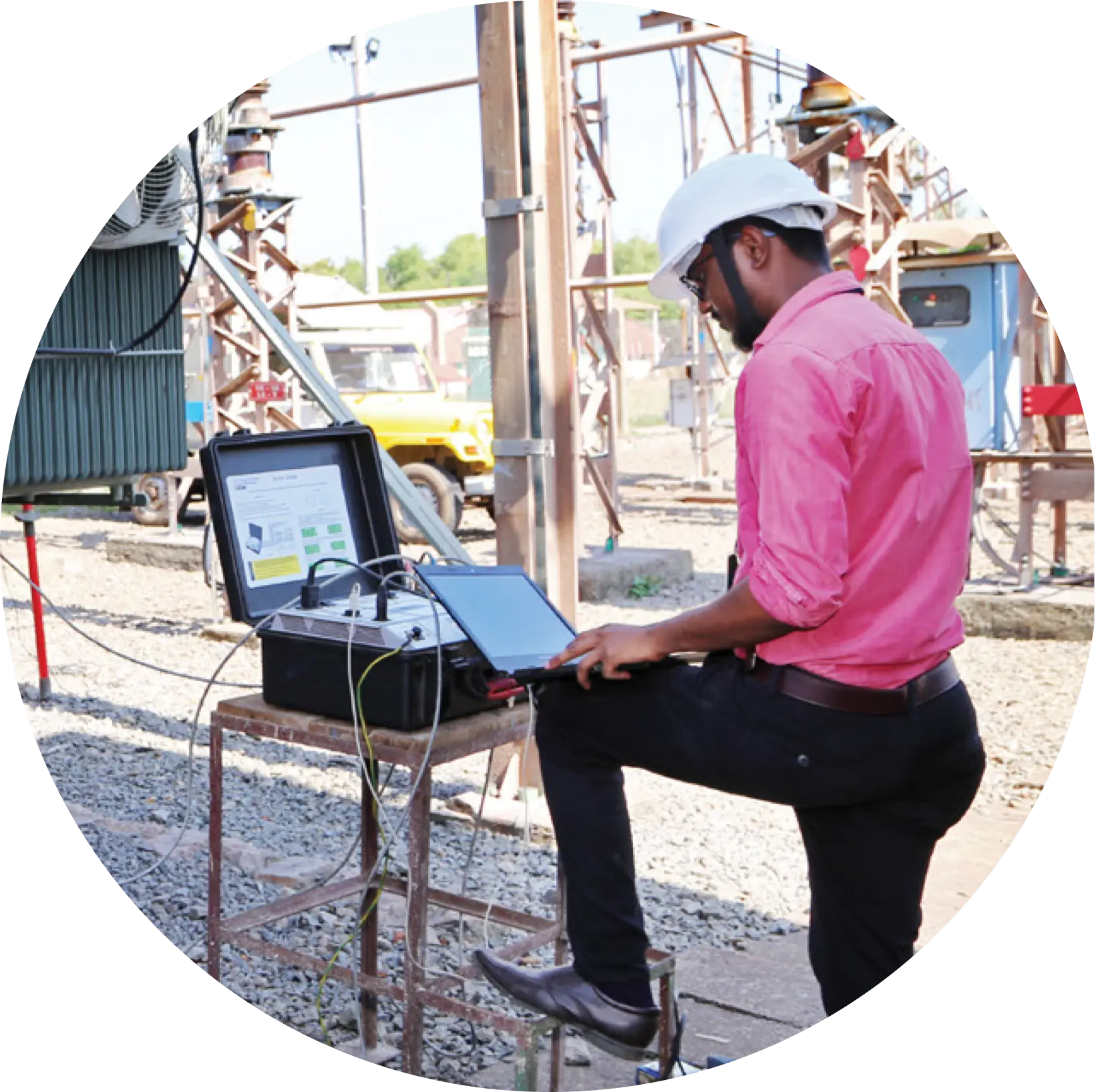
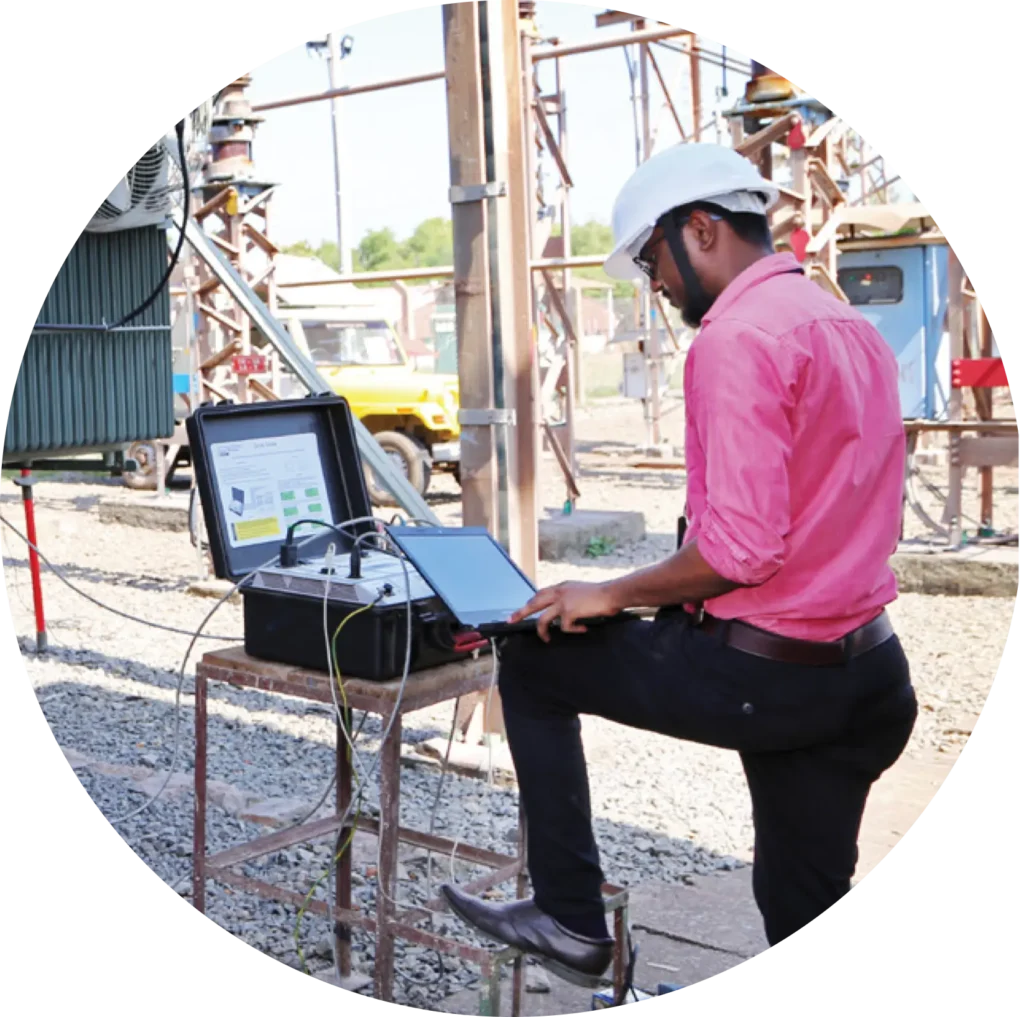
Dynamic Contact Resistance measurement (DCRM) is an On-load tap-changer diagnostic method to understand the state of the OLTC. It is a simple and effective method in which without opening OLTC or the Transformer, condition of the OLTC can be monitored. DCRM test involves specific test procedures, thereby the test results are recorded systematically in the Computer in the form of Current graphs.
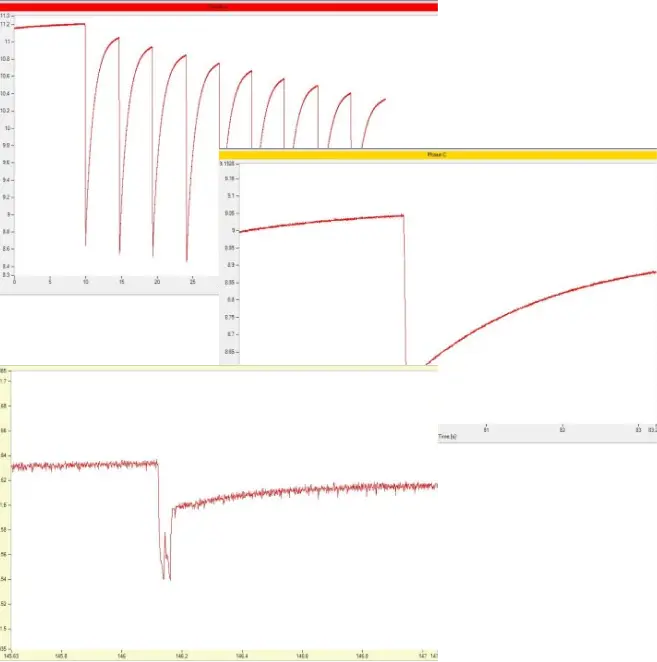
By analyzing the recorded graphs, OLTC healthiness can be declared. The Current graph also indicates the location of the fault in OLTC which reduces the overhauling time and thereby reducing Transformer outage time.
A typical graph with the ”V“ curve is shown above. By zooming into this curve, the specialists can assess whether the curve is due to irregularities, such as interrupters or bounces. The status could thus be assessed using the measurement.
After the measurement, the transformer can be demagnetized with the same measuring instrument. In the measurements, EMR uses devices from the company Ibeko, also known as DV-Power, which have been developed specifically for EMR requirements.
DCRM- frequently asked questions
What is DCRM in OLTC diagnostics?
DCRM (Dynamic Contact Resistance Measurement) is a diagnostic method used to assess the condition of an on-load tap-changer. It evaluates OLTC performance without opening the transformer or tap-changer compartment.
Why is Dynamic Contact Resistance Measurement for OLTC important?
Dynamic Contact Resistance Measurement for OLTC helps identify contact wear, misalignment, or degradation at an early stage. This supports preventive maintenance planning and reduces the risk of unexpected OLTC failures.
How does the DCRM test work on an OLTC system?
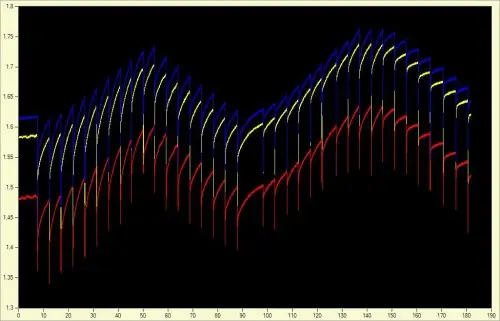
The DCRM test follows a defined test procedure where resistance values are recorded during tap change operations. The results are captured as current graphs in a computer system for accurate condition analysis.
What operational advantages does DCRM provide for transformer maintenance?
DCRM allows OLTC condition monitoring without dismantling the transformer or tap-changer. This minimizes inspection downtime, reduces manual intervention, and supports faster maintenance decision-making.
When should utilities perform DCRM testing on OLTC-equipped transformers?
DCRM testing is performed during routine transformer condition assessments or before planned maintenance cycles. It is specified when an accurate OLTC health evaluation is required without service interruption.