Ask any plant head or substation engineer what keeps them up at night, and “unexpected transformer failure” is usually near the top of the list. Transformers sit at the centre of every power system, and when utilities or industries try to piece together monitoring, control, and protection using disconnected devices from multiple vendors, gaps appear , a fault gets detected too late, a tap-change happens without proper feedback, or a protection relay isn’t calibrated to the actual failure mode it needs to catch.
Our experts at EMR Global are regularly asked the same underlying question in different words: “How do we actually monitor, control, and protect our transformer properly , not just tick a compliance box?” This blog lays out a clear, practical answer, built around the three functions that matter and the device engineered to tie them together: the protective relay.
The Real Problem: Monitoring, Control and Protection Are Treated as Separate Line Items
Many transformer failures aren’t sudden , they are the end point of a slow-building condition that went undetected, uncorrected, or unprotected. In practice, this happens because organisations:
- Install temperature and gas sensors but don’t integrate the data into a single control system.
- Rely on tap-changers for voltage control without proper feedback and protection logic behind them.
- Depend on a single protection device to catch every fault type, instead of pairing detection with a purpose-built relay for the specific failure mode (like OLTC-related pressure surges).
The fix isn’t more sensors , it’s a coordinated approach where monitoring feeds control, and both are backed by dedicated protection.
1. Monitor: Know the Real-Time Condition of the Transformer
Effective monitoring means continuously tracking the parameters that reveal a transformer’s health before a fault becomes visible from outside:
- Load current and voltage measurement, along with active and reactive power, to track loading trends
- Oil temperature, winding temperature, and ambient temperature, since thermal stress is one of the earliest indicators of insulation ageing
- Gas and moisture measurement from installed sensors, which flag internal insulation degradation long before it becomes a visible fault
- Oil level indication, to catch leaks or abnormal oil loss early
- Alarm and tripping signals from devices such as the Buchholz relay, consolidated into one view
This data is only useful if it reaches the people who need it, which is why modern monitoring systems connect to SCADA/DCS using standard protocols such as IEC 60870-5-101/104 and IEC 61850, with an integrated web server for remote access.
2. Control: Act on What the Monitoring System Sees
Monitoring tells you what’s happening; control is what lets you respond. For transformers, control primarily means:
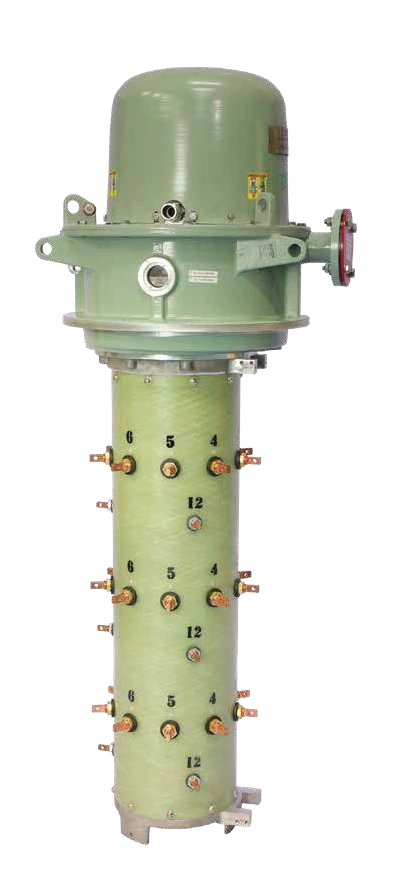
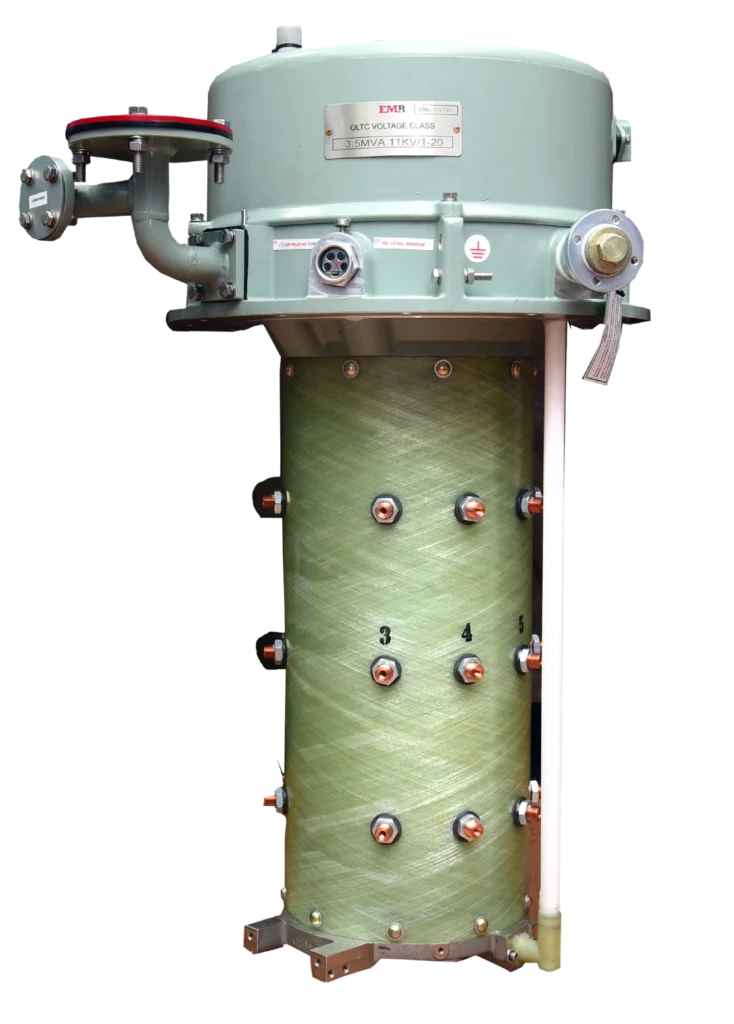
- Voltage regulation through the On-Load Tap-Changer (OLTC), which steps the ratio up or down to correct voltage deviations without interrupting supply
- Freely configurable inputs and outputs, so the control system can be tailored to plant-specific requirements rather than forcing a one-size-fits-all setup
- Tailor-made monitoring-linked functions, such as overload capability management, which adjust operation based on real-time load and thermal data rather than fixed assumptions
Control without accurate monitoring is guesswork, and monitoring without control is just data collection , the two functions have to be linked for either to be genuinely useful.
3. Protect: The Job of the Protective Relay
This is where most DIY (Do It Yourself) setups fall short, and where our experts consistently recommend a dedicated protective relay rather than relying on general-purpose protection alone.
A protective relay is a safety device designed to detect abnormal operating conditions and initiate transformer tripping before a developing fault causes catastrophic damage , particularly around the OLTC, which is one of the most electromechanically active and failure-prone components on the transformer.
EMR Global’s protective relay is built around the Oil Surge Relay (OSR), which operates on the principle of oil turbulence:
- The OSR is mounted in the pipeline connecting the conservator and the OLTC.
- Under normal operating conditions, oil flows through this pipeline at a controlled, steady rate.
- If an internal fault develops inside the OLTC, it causes a pressure build-up, which forces oil through the pipeline at an abnormally high rate , creating oil turbulence.
- The moment this flow rate exceeds the safe threshold, the OSR trips the transformer, isolating it before the fault can escalate into major mechanical or thermal damage.
The OSR is also built and tested to keep working reliably under extreme environmental conditions and high seismic activity, an important detail for installations in demanding geographies.
Our Experts’ Recommended Approach
When clients ask how to properly monitor, control, and protect a transformer fleet, our engineering team recommends treating it as one integrated system rather than three separate purchases:
- Start with monitoring coverage across load, temperature, gas/moisture, and oil level, feeding into SCADA/DCS.
- Pair monitoring with OLTC-based control, so voltage correction happens automatically based on real-time readings, not manual intervention.
- Back the OLTC with an OSR-based protective relay specifically watching for oil-turbulence-driven faults, since the tap-changer is a common source of undetected mechanical failure.
- Choose configurable, standards-compliant systems (IEC 61850, IEC 60870-5-104) so the monitoring, control, and protection layers can actually talk to each other and to your central control room.
This is the same approach EMR Global brings to utilities and industrial clients, not selling a single device, but engineering monitoring, control, and protection to function as one coordinated safety net around the transformer.
Frequently Asked Questions
What is an OLTC protective relay in transformer protection systems?
A protective relay is a safety device designed to detect abnormal operating conditions and initiate transformer tripping. It specifically protects the OLTC from damage caused by internal faults that other protection devices may not catch in time.
Why is a protective relay essential for OLTC protection?
A protective relay safeguards OLTC systems by detecting fault-induced oil turbulence and pressure rise inside the tap-changer. This prevents severe mechanical damage and limits fault escalation before it reaches the rest of the transformer.
How does the Protective Oil Surge Relay (OSR) operate in OLTC systems?
The OSR operates on the principle of oil turbulence in the pipeline between the conservator and the OLTC. When abnormal oil flow exceeds safe limits due to an OLTC fault, the OSR trips the transformer to isolate it immediately.
What conditions trigger a protective relay to trip the transformer?
Internal OLTC faults create pressure build-up and increased oil flow through the OSR. When this flow exceeds controlled operating levels, the protective relay activates tripping to safeguard both the transformer and the OLTC.
When should utilities specify OSR-based protective relay systems in transformer procurement?
OSR-based protective relay systems should be specified whenever transformers operate under critical grid conditions requiring rapid fault isolation, and where reliable performance under extreme environmental or seismic conditions is a requirement.