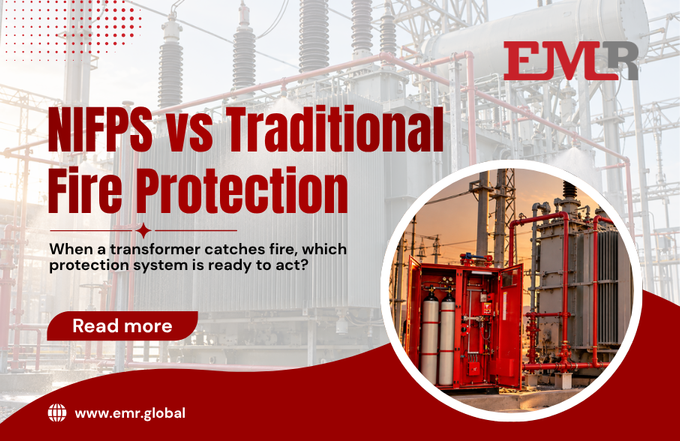
A transformer fire is one of the most destructive events a substation can face. The oil that cools and insulates the transformer is also flammable, and once an internal fault ignites it, the fire can escalate in seconds, threatening the asset, nearby equipment, and personnel. The question for any operator isn’t whether to protect against it, but which method actually stops a fire before it becomes a catastrophe.
This guide compares the two main approaches: nitrogen injection systems (NIFPS/NITPS) and traditional water-based systems like deluge and water spray so you can see how each works and where each fits.
Why transformers need dedicated fire protection
A power transformer holds a large volume of mineral oil under pressure. When an internal fault such as a winding failure, insulation breakdown, or arc releases energy into that oil, two things happen almost at once: pressure rises sharply, and the oil can ignite. Left unchecked, the result is a tank rupture and an oil-fed fire that is extremely difficult to extinguish.
The challenge is speed. By the time a conventional system detects flames and responds, the fire may already be established. Effective transformer fire protection has to act in the critical first moments, ideally before or just as ignition occurs.
Traditional fire protection: water spray and deluge systems
Water-based systems water spray, sprinkler, or deluge have been used for transformer fire protection for decades, and remain part of recognised industry fire-protection guidance such as NFPA 850. They work by detecting a fire and then spraying large volumes of water (sometimes with foam) over the transformer to cool it and suppress the flames.
Strengths:
- Well-established and widely understood
- Effective at cooling and controlling an external oil fire once it has started
- Can protect surrounding structures from fire spread
Limitations:
- They are reactive they respond after a fire has developed, not before
- They need a large, reliable water supply and pumping infrastructure
- Water on an energised or oil-fed fire brings its own risks
- They don’t address the internal pressure rise and oil condition that drive the fire in the first place
In short, traditional systems are good at fighting a transformer fire, but they do little to prevent one.
Nitrogen injection fire protection (NIFPS / NITPS)
Nitrogen injection systems take a fundamentally different, preventive approach. Instead of waiting to fight flames, they act on the root conditions of a transformer fire the oil, the oxygen, and the pressure in the critical first moments.
When a fault is detected, the system drains a controlled volume of hot oil from the top of the tank to relieve pressure, and injects nitrogen to displace oxygen and cool the oil below its ignition point. By removing the oxygen and the heat an oil fire needs, it prevents ignition rather than merely suppressing an established blaze.
The decisive factor is response time. EMR’s NITPS is built around early arc detection and activates in 50 milliseconds, the fastest in the industry so it acts in the window where a fire can still be prevented. It continuously monitors the transformer’s internal condition and integrates with the transformer’s protection relays and arc and heat sensors, so multiple independent triggers can activate it.
Strengths:
- Preventive acts before ignition, not after
- Extremely fast activation (50 ms early-arc detection)
- Addresses pressure rise and oxygen directly
- Integrates with protection relays and arc/heat sensors for layered triggering
- No large water infrastructure required
Considerations:
- Requires nitrogen supply and periodic system checks
- Best specified and installed by an experienced supplier
NIFPS vs traditional fire protection: side-by-side
| Factor | Water spray / deluge | Nitrogen injection (NITPS/NIFPS) |
| Approach | Reactive: suppresses an existing fire | Preventive stops ignition |
| Response speed | After fire develops | ~50 ms via early arc detection |
| Acts on root cause (oxygen, pressure, heat) | No | Yes |
| Infrastructure needed | Large water supply + pumps | Nitrogen cylinders, compact skid |
| Risk to energised equipment | Water-related risks | Inert gas, no water |
| Primary role | Limit fire spread | Prevent catastrophic failure |
Which approach is right for you?
The two are not mutually exclusive in high-value installations, they can complement each other, but their roles differ:
Choose nitrogen injection (NITPS/NIFPS) when the priority is preventing a catastrophic, oil-fed transformer fire and protecting the asset itself, especially for critical substation, power, and furnace transformers where downtime and replacement costs are high.
Consider water-based systems when the main concern is limiting fire spread to surrounding structures, or where existing site infrastructure and standards require them.
For most modern transformer installations, the shift is toward preventive protection, stopping the fire before it starts rather than fighting it after. That’s where a fast nitrogen injection system delivers the most value.
The bottom line
Traditional water-based systems fight a transformer fire once it has taken hold; nitrogen injection systems prevent it from igniting in the first place. Because transformer fires escalate in seconds, the speed and preventive nature of a nitrogen injection system activating in milliseconds on early arc detection and removing the oxygen, heat, and pressure a fire needs make it the stronger line of defence for protecting the transformer itself.
If you’re evaluating fire protection for your transformers, EMR’s Nitrogen Injection Transformer Protection System is engineered around early arc detection and industry-leading response time. EMR’s team can help assess your installation and specify the right configuration.
Frequently Asked Questions
What is the difference between NIFPS and water spray fire protection?
Water spray systems are reactive; they suppress a fire after it has developed. A nitrogen injection system (NIFPS/NITPS) is preventive: it drains hot oil to relieve pressure and injects nitrogen to displace oxygen and cool the oil, stopping ignition before a fire can start.
How fast does a nitrogen injection fire protection system respond?
EMR’s NITPS activates in about 50 milliseconds using early arc detection, the fastest in the industry, which is what allows it to act in the brief window where a fire can still be prevented.
Can nitrogen injection and water-based systems be used together?
Yes. In high-value installations, they can complement each other: nitrogen injection prevents ignition of the transformer itself, while water-based systems can limit fire spread to surrounding structures.
Why is water alone not ideal for transformer fires?
Water-based systems act only after a fire develops, need large water and pumping infrastructure, and don’t address the internal pressure rise and oxygen that drive an oil fire. Applying water to an oil-fed or energised fire also carries its own risks.
Which transformers most need nitrogen injection protection?
Critical substation, power, and furnace transformers where an oil fire would cause major downtime, asset loss, or safety risk benefit most from fast, preventive nitrogen injection protection.