When the Transformer Is Too Critical to Fail
At 400 kV and 765 kV, a single transformer can carry the power of an entire city. Its tap changer may switch dozens of times a day as load and renewable output rise and fall. Each switch has to be clean, fast and repeatable for decades, because an OLTC fault at this level means a forced outage of a key grid asset.
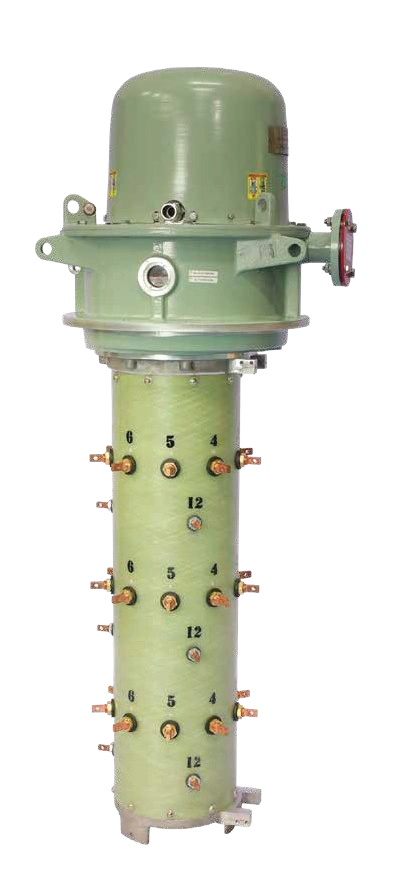
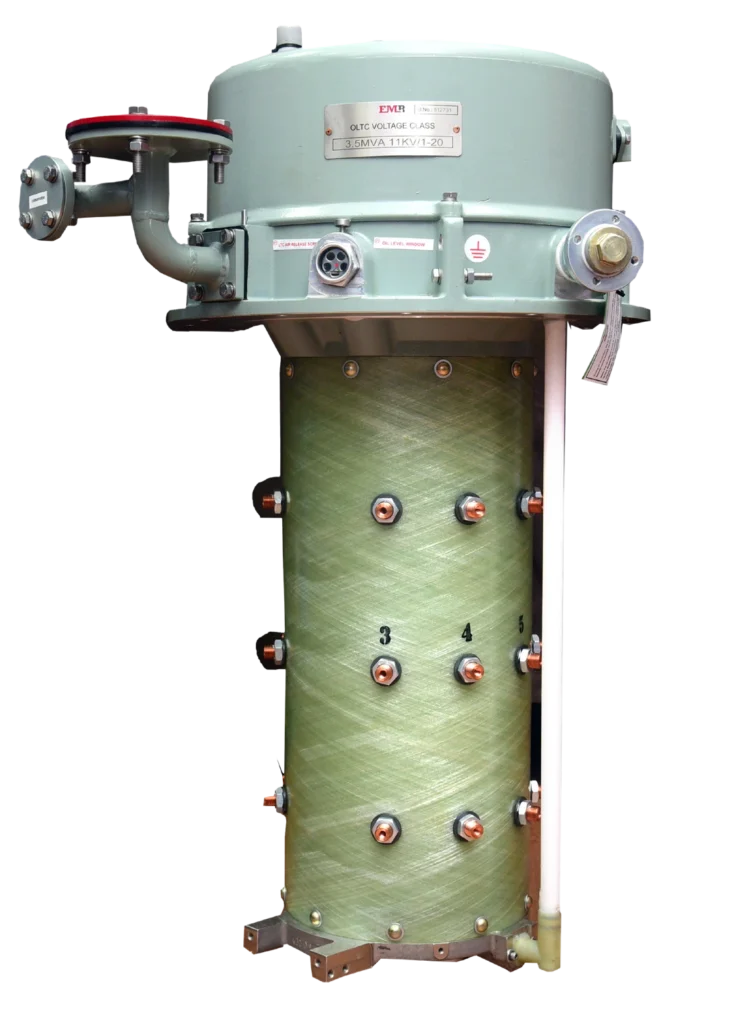
EMR’s Type M was built for exactly this duty. It is the company’s high-capacity on-load tap changer, used in transformers up to 765 kV, and it combines high current ratings with a switching design that keeps wear low. Here is how it works and where it fits.
Type M at a Glance
| Parameter | Type M rating |
| Highest voltage of equipment | Up to 765 kV |
| Rated current, three-pole | 350–700 A |
| Rated current, single-pole | 350–2,400 A |
| Maximum step voltage | 3,300 V |
| Regulating range | ±9 to ±17 steps |
| Operating positions | Up to 35 |
| Connections | Star (Y) and delta (D) |
How Type M Switches Under Load
Every OLTC has two jobs: choose the next tap, and move the load current onto it without interruption. Type M splits these between a tap selector and a diverter switch.
- Command: the Motor Drive Unit receives a raise or lower signal from the voltage regulator or SCADA.
- Pre-selection: the tap selector moves to the next tap while no current flows through it.
- Diverter operation: the high-speed diverter switch transfers the load current to the new tap through transition resistors.
- Arc extinction: the arc is extinguished at the first current zero, so it lasts as short a time as possible.
- Feedback: the new position is confirmed back to the control room, and the cycle is ready to repeat.
Because the arc is cleared at the first current zero, the transition resistors see very little thermal stress. That is the main reason for Type M’s long life and reduced maintenance.
Design Features That Matter at High Voltage
- High-speed diverter switch: fast, clean transfer that limits contact wear and oil contamination.
- Tap selector matched to impulse voltage: the selector is sized to the transformer’s impulse voltage rating, so insulation is right-sized rather than oversized.
- Contacts for alternative liquids: special contacts allow use with alternative insulating liquids, giving utilities that are moving to ester oils a ready option.
- Single-pole versions to 2,400 A: large generator and transmission transformers get the current capacity they need.
- Wide regulating range: up to ±17 steps and 35 positions give fine voltage control across heavy load swings.
Where Type M Is Used
- Transmission substations: 220 kV, 400 kV and 765 kV interconnecting transformers.
- Grid expansion projects: new corridors that must comply with grid code voltage limits.
- Renewable integration: pooling station transformers where solar and wind output varies through the day.
- Large industrial supply: high-current transformers feeding steel plants, refineries and other heavy loads.
Keeping Type M Healthy for Decades
A high-capacity OLTC rewards good care. EMR supports Type M throughout its life with DCRM testing, which checks contact condition without opening the OLTC or the transformer. EMR also supplies genuine spares, tested before dispatch with a one-year warranty, and Motor Drive Units with SCADA connection over IEC 61850 and IEC 60870-5-101/104. For older transformers, EMR’s retrofit service can replace an ageing tap changer with a new EMR OLTC at a fraction of the cost of a new transformer.
The Bottom Line
Type M brings together the ratings that transmission transformers demand, up to 765 kV and 2,400 A, and a fast diverter design that keeps wear and maintenance low. Backed by EMR’s 50 years of OLTC experience, it is built to regulate voltage reliably on the transformers the grid can least afford to lose.
Frequently Asked Questions
1. What voltage levels does the EMR Type M OLTC support?
Type M is used in power transformers up to 765 kV, with three-pole and single-pole versions.
2. What is the maximum current rating of Type M?
Three-pole versions are rated 350 to 700 A, and single-pole versions 350 to 2,400 A.
3. Why does arc extinction at the first current zero matter?
It keeps the arc as short as possible, which lowers thermal stress on the transition resistors and reduces contact wear and maintenance.
4. Can Type M be used with ester or other alternative insulating oils?
Yes. Type M has special contacts designed for alternative insulating liquids.
5. Is Type M available outside India?
Yes. Type M is part of EMR’s global range, offered as standard to international markets.
CTA: Specifying a transmission or generator transformer? Download the Type M brochure or write to emr@emr.global to discuss your ratings with EMR’s engineers.