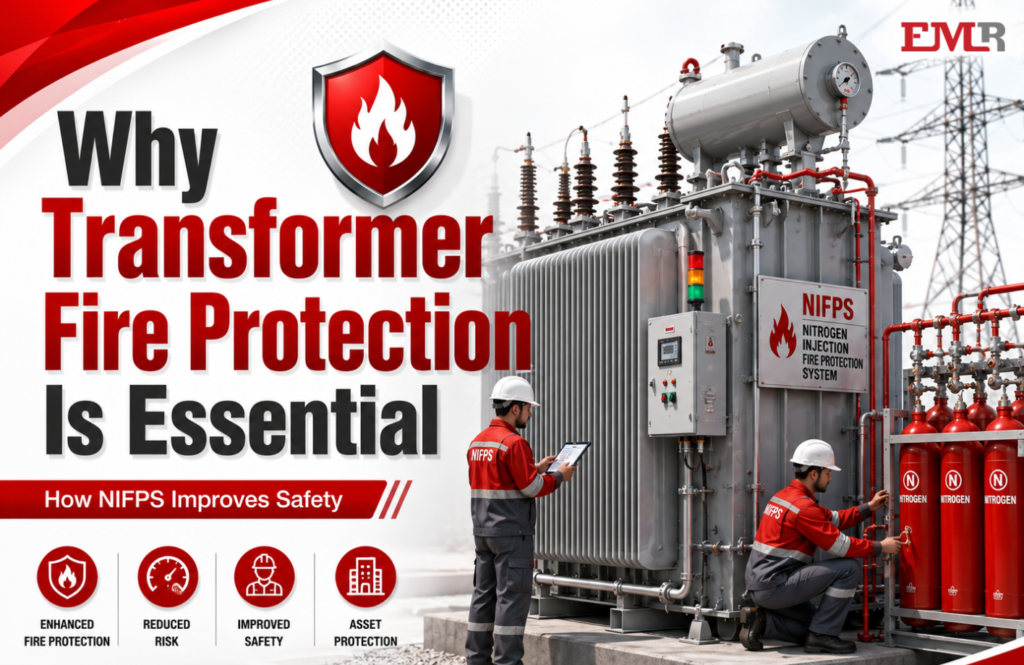
Nitrogen injection fire protection system for transformers solutions are becoming essential in modern power infrastructure because transformer fires can cause severe operational damage, safety hazards, and costly downtime. Advanced NIFPS technology helps utilities and industries reduce explosion risk, improve transformer safety, and protect critical electrical assets.
A nitrogen injection fire protection system for transformers helps reduce the risk of fire and explosion during severe internal transformer faults.
Why Transformer Fire Protection Is Essential
Transformer safety is one of the most critical priorities in modern power systems. In utility substations, industrial plants, renewable energy facilities, and transmission infrastructure, transformer failure can lead to severe operational and financial consequences.
One of the biggest risks associated with oil-filled transformers is fire and explosion caused by internal faults. When heat, arcing, and pressure rise rapidly inside a transformer, the situation can escalate into a dangerous fire event that threatens nearby infrastructure, operational continuity, and personnel safety.
This is exactly why the topic of nitrogen injection fire protection systems for transformers has become increasingly important across the power industry.
As transformer capacities and operational demands continue to increase, advanced fire protection systems are becoming essential for long-term safety and asset protection.
What Causes Transformer Fires?
Oil-filled transformers operate under high thermal and electrical stress. During abnormal conditions, internal faults can generate excessive heat and pressure inside the transformer tank.
Common causes of transformer fires include:
- Internal short circuits
- Electrical arcing
- Insulation failure
- Overheating
- Bushing failure
- OLTC faults
- Oil ignition
- Pressure build up inside the transformer
If these conditions are not controlled quickly, they can lead to fire escalation and catastrophic transformer failure.
In critical installations, even a single transformer fire can result in:
- Major equipment damage
- Operational shutdowns
- Expensive repairs
- Safety hazards
- Environmental damage
- Loss of power continuity
This makes transformer fire protection a critical part of modern asset management.
What Is a Nitrogen Injection Fire Protection System?
A Nitrogen Injection Fire Protection System (NIFPS) is an advanced transformer safety solution designed to reduce fire and explosion risk during internal transformer faults.
The system works by injecting nitrogen into the transformer when dangerous fault conditions are detected.
Nitrogen helps suppress combustion by reducing oxygen concentration inside the transformer environment. This minimizes the risk of oil ignition and helps control fault escalation.
Main Objectives of NIFPS
- Reduce transformer fire risk
- Prevent fault escalation
- Improve operational safety
- Protect nearby infrastructure
- Support business continuity
- Minimize explosion hazards
NIFPS systems are widely used in critical transformer installations where safety and operational reliability are high priorities.
Modern transformer protection strategies increasingly include nitrogen injection fire protection system for transformers technology to reduce operational risk.
How Nitrogen Injection Fire Protection System for Transformers Works
Rapid Response During Fault Conditions
The system reacts quickly when abnormal pressure or fault conditions are detected inside the transformer.
Fire Suppression Support
Nitrogen injection helps reduce combustion conditions and suppress fire development.
Explosion Risk Reduction
By controlling pressure rise and fire escalation, NIFPS helps reduce explosion related damage.
Protection of Critical Assets
The system helps safeguard nearby electrical infrastructure and connected equipment.
Improved Personnel Safety
Reducing transformer fire risk improves safety for operators and maintenance personnel.
Why NIFPS Is Important for Critical Infrastructure
Large power transformers are among the most valuable assets in electrical infrastructure. Their failure can affect entire operations and create major financial losses.
NIFPS systems are especially important in:
- Utility substations
- Power generation plants
- Heavy industrial facilities
- Renewable energy projects
- Transmission networks
- High-capacity transformer installations
In these environments, transformer fire protection is not just a technical requirement — it is part of a broader risk management strategy.
As industries focus more on infrastructure resilience and operational continuity, nitrogen based transformer protection systems are becoming increasingly important.
Key Benefits of Nitrogen Transformer Protection
Enhanced Fire Protection
NIFPS helps control fire conditions during internal transformer faults.
Reduced Asset Damage
Quick fault response helps minimize large scale equipment destruction.
Better Operational Reliability
Improved transformer safety supports uninterrupted operations.
Improved Infrastructure Protection
The system helps prevent fire spread to nearby equipment and systems.
Lower Operational Risk
Organizations can reduce the risk of catastrophic transformer failure.
Support for Safety Compliance
NIFPS supports safety focused operational standards and protection practices.
NIFPS and Modern Transformer Risk Management
Transformer management today goes beyond routine maintenance. Organizations now focus heavily on:
- Asset reliability
- Fault prevention
- Operational safety
- Downtime reduction
- Infrastructure protection
- Business continuity planning
NIFPS systems align directly with these objectives by reducing the likelihood of severe fires and improving transformer protection capabilities.
For utilities and industries managing mission-critical power infrastructure, nitrogen injection fire protection systems offer an additional layer of operational security.
Applications of Nitrogen Injection Fire Protection Systems
NIFPS solutions are widely used across:
- Power transformers
- Utility substations
- Industrial power systems
- Renewable energy infrastructure
- Power generation facilities
- Transmission and distribution networks
As transformer safety standards continue to evolve, nitrogen-based fire protection systems are becoming more widely adopted across the global power industry.
EMR Global’s NITPS Solution
EMR Global’s nitrogen injection fire protection system for transformers solution is designed to improve transformer fire protection and operational safety during internal transformer fault conditions.
The system focuses on reducing fire escalation risk while helping protect valuable transformer infrastructure and supporting long-term operational reliability.
By offering advanced nitrogen transformer protection technology, EMR Global supports utilities and industrial operators in improving infrastructure safety, reducing operational risk, and strengthening asset protection strategies.
Conclusion
A nitrogen injection fire protection system for transformers is an essential safety solution for modern power infrastructure.
By helping suppress fire conditions during internal transformer faults, NIFPS systems reduce explosion risk, improve operational safety, and protect valuable electrical assets from catastrophic damage.
For utilities, industrial plants, substations, and critical infrastructure operators, transformer fire protection is no longer optional — it is a key part of long-term reliability and risk management.
As transformer systems continue to evolve, nitrogen-based fire protection technology will play an increasingly important role in safer and more resilient power networks.