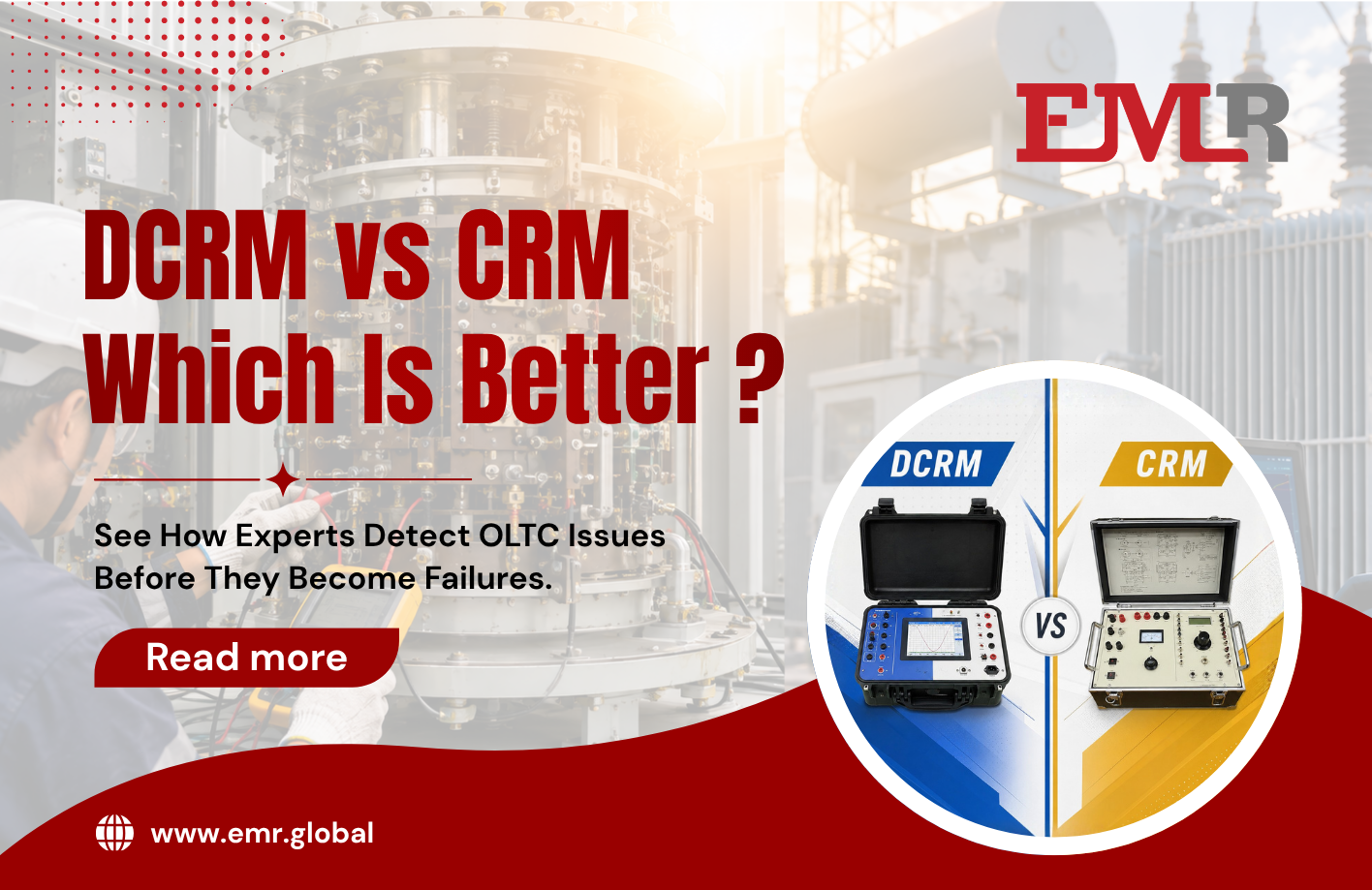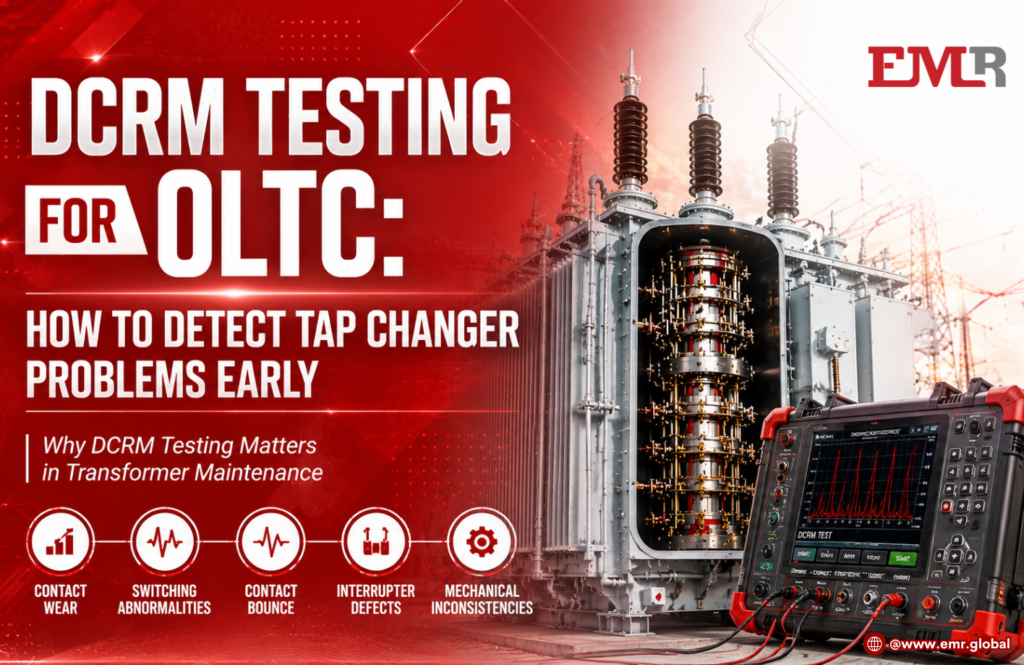
DCRM testing for OLTC has become an essential diagnostic method for utilities and industries aiming to improve transformer reliability. By using DCRM testing for OLTC, maintenance teams can identify hidden tap changer defects before they develop into major operational failures.
Why DCRM Testing Matters in Transformer Maintenance
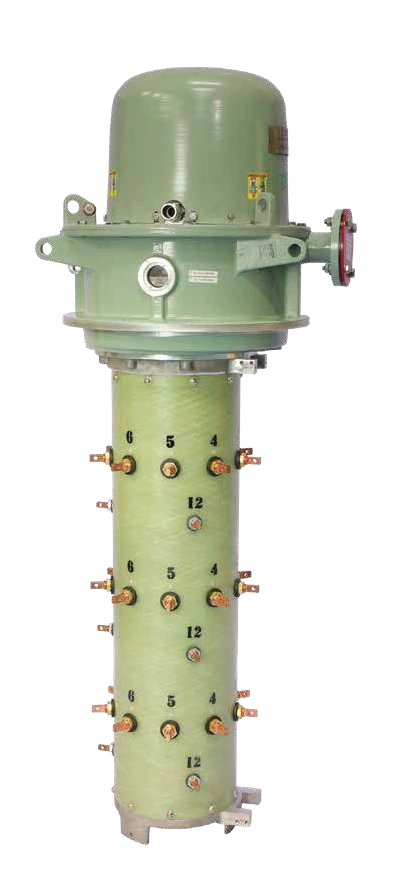
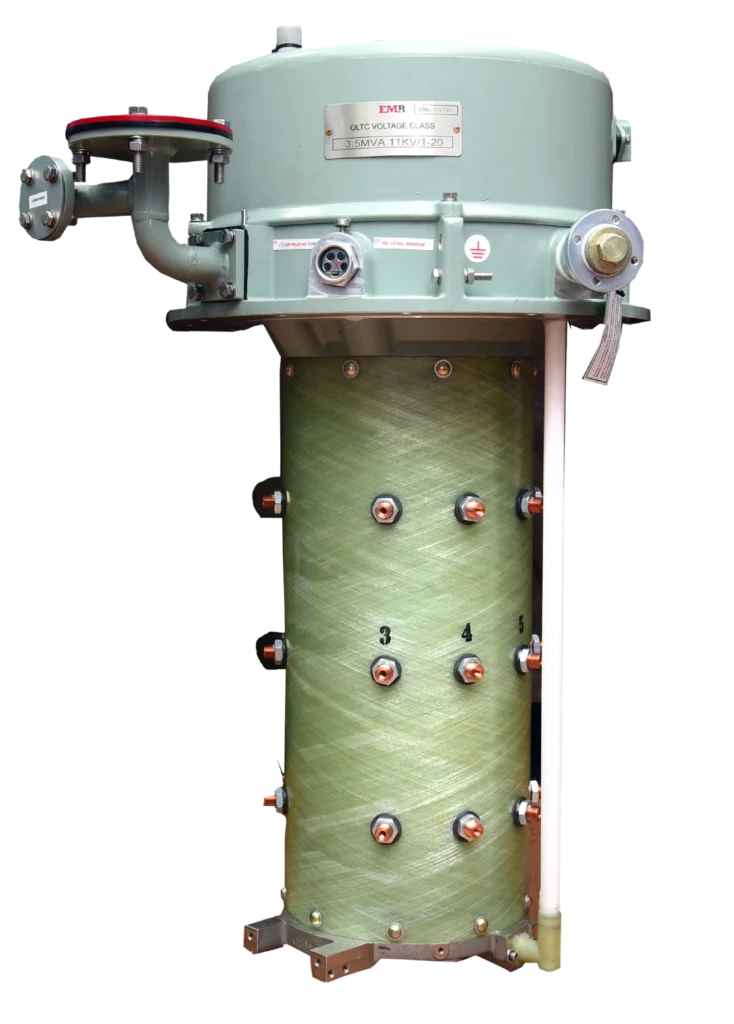
Transformer reliability depends heavily on the health of the On-Load Tap Changer (OLTC). Since the OLTC is one of the most mechanically active parts of a transformer, it is also one of the components most vulnerable to wear, switching defects, and internal deterioration over time.
This is exactly why DCRM testing for OLTC has become one of the most valuable diagnostic techniques in modern transformer maintenance.
Dynamic Contact Resistance Measurement (DCRM) allows engineers and maintenance teams to evaluate the internal condition of an OLTC without dismantling the transformer. Instead of waiting for visible operational failures or unexpected outages, utilities and industries can identify early warning signs before they become costly problems.
For critical power infrastructure, early fault detection plays a major role in reducing downtime, improving reliability, and extending transformer service life.
What Is DCRM Testing?
DCRM stands for Dynamic Contact Resistance Measurement. It is a specialized testing method used to analyze the performance of OLTC contacts during tap-changing operations.
Unlike static resistance testing, DCRM monitors resistance dynamically while the OLTC is actively switching between tap positions. During the process, current graphs and resistance curves are generated, helping engineers identify abnormalities in switching behavior.
This diagnostic approach provides valuable insights into the true operating condition of the tap changer.
What DCRM Testing Can Detect
DCRM testing helps identify:
- Contact wear
- Switching abnormalities
- Contact bounce
- Interrupter defects
- Transition issues
- Irregular resistance patterns
- Mechanical inconsistencies
Many of these problems remain hidden during routine inspections but can eventually lead to transformer failure if left unaddressed.
Why OLTC Diagnostics Are So Important
An OLTC performs thousands of switching operations throughout its operational life. Over time, repeated electrical and mechanical stress can gradually damage internal components.
Common OLTC problems include:
Contact Deterioration
Frequent switching operations can wear down contacts and increase resistance.
Mechanical Wear
Internal linkages and moving components may lose alignment or efficiency.
Switching Sequence Issues
Improper switching timing can create abnormal voltage behavior.
Overheating
Poor contact conditions may generate excessive heat inside the OLTC.
Voltage Regulation Problems
Defective OLTC performance directly affects transformer voltage stability.
Without proper diagnostics, these issues may remain unnoticed until a major outage occurs.
How DCRM Testing for OLTC Works
During a DCRM test, a controlled current is injected into the OLTC circuit while tap change operations are performed. The test equipment continuously records resistance variations throughout the switching sequence.
The resulting graphs are then analyzed to identify abnormalities.
Contact Wear Detection
Worn contacts often produce irregular resistance signatures during operation.
Switching Abnormality Analysis
Unexpected curve patterns may indicate problems in the switching mechanism.
Contact Bounce Identification
Mechanical instability can cause inconsistent switching behavior, visible in the waveform.
Fault Location Support
DCRM testing can help engineers identify the likely location of internal defects, reducing troubleshooting time.
This makes DCRM a highly effective predictive maintenance tool for transformer asset management.
Major Benefits of DCRM Testing
Early Fault Detection
DCRM testing identifies developing OLTC problems before they become critical failures.
Reduced Transformer Downtime
Maintenance teams can diagnose issues faster and reduce outage duration.
Non-Intrusive Testing
The OLTC can be evaluated without dismantling the transformer.
Better Maintenance Planning
Utilities can move from reactive maintenance to condition-based maintenance strategies.
Improved Transformer Reliability
Healthy OLTC operation improves voltage regulation and overall transformer performance.
Lower Maintenance Costs
Early diagnosis reduces the likelihood of major repairs and emergency failures.
DCRM and Condition-Based Maintenance
Modern transformer maintenance is increasingly focused on predictive and condition-based maintenance rather than fixed maintenance schedules.
Instead of opening transformers periodically regardless of condition, operators now rely on real diagnostic data to determine maintenance requirements.
DCRM testing supports this approach by providing accurate insight into OLTC health and operational performance.
This helps organizations:
- Reduce unnecessary servicing
- Improve maintenance efficiency
- Prioritize high-risk assets
- Minimize unexpected breakdowns
- Extend transformer lifecycle value
For utilities managing large transformer fleets, condition-based diagnostics significantly improve operational reliability.
When Should DCRM Testing Be Performed?
DCRM testing is highly recommended when transformers show warning signs such as:
- Unstable tap changing
- Irregular voltage control
- Abnormal switching sounds
- Suspected contact wear
- Inconsistent OLTC operation
- Unexpected transformer behavior
It is also valuable:
- During preventive maintenance
- Before major overhauls
- During transformer health assessments
- After fault conditions
- As part of predictive maintenance programs
Routine OLTC diagnostics help prevent small issues from becoming large operational failures.
How EMR Global Supports OLTC Diagnostics
At EMR Global, DCRM testing is positioned as a practical and advanced diagnostic solution for transformer reliability management.
The testing process helps evaluate OLTC condition, identify likely fault locations, reduce overhaul time, and minimize transformer outage duration.
By combining diagnostic expertise with transformer maintenance knowledge, EMR supports utilities and industrial operators in improving operational continuity and long-term asset performance.
Conclusion
DCRM testing for OLTC is one of the most effective diagnostic methods for identifying hidden tap changer issues before they lead to major transformer failures.
By analyzing dynamic resistance behavior during switching operations, engineers can detect contact wear, switching abnormalities, and internal OLTC defects without intrusive dismantling.
For utilities, industries, and power infrastructure operators, DCRM testing supports predictive maintenance, reduces outage risk, improves transformer reliability, and strengthens long-term asset management strategies.
As power systems continue to demand higher uptime and operational stability, advanced OLTC diagnostics are becoming essential for modern transformer maintenance.