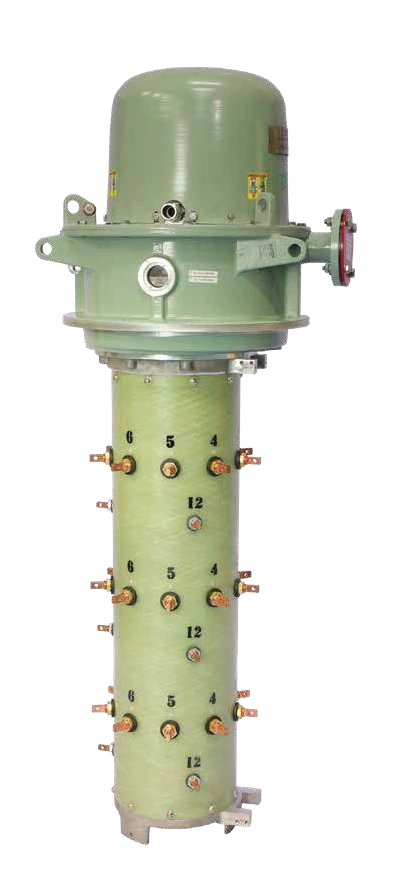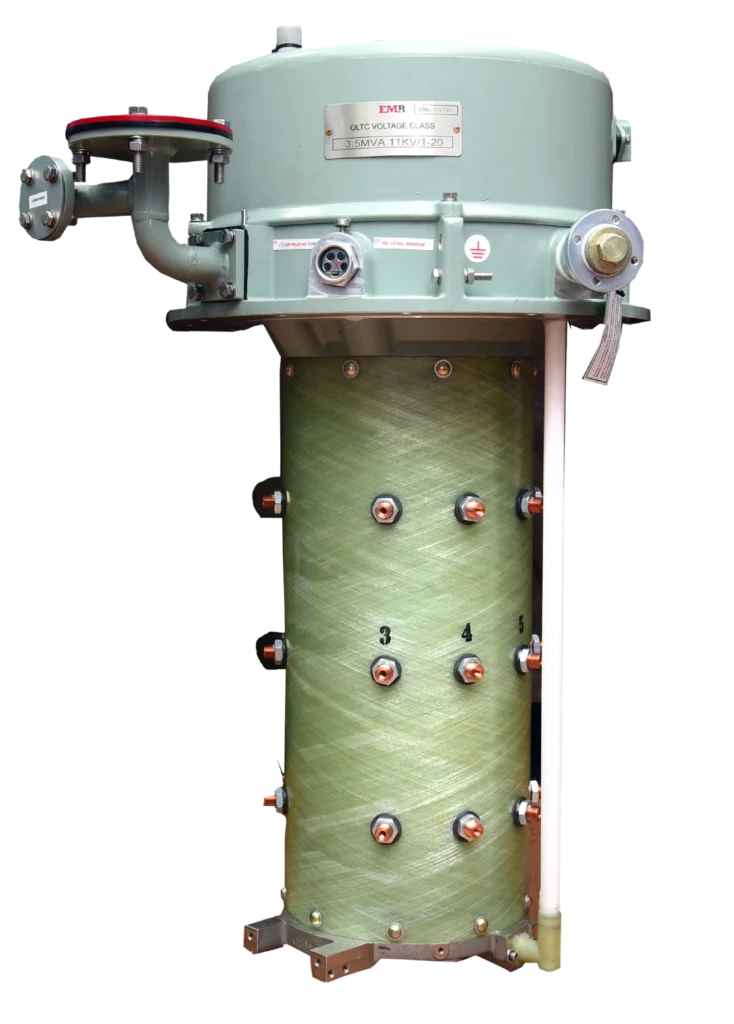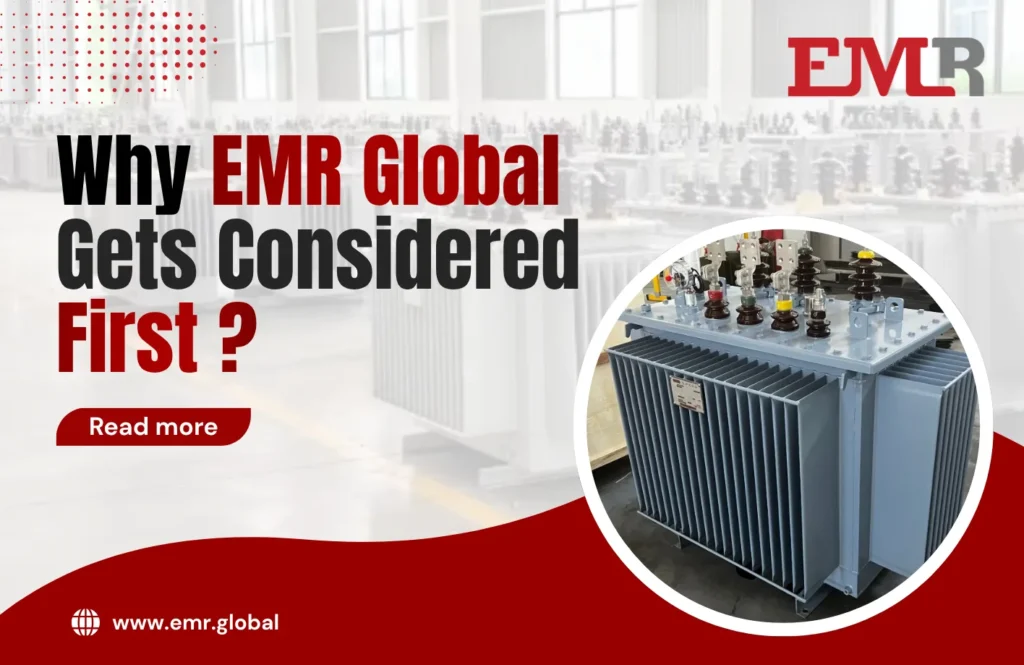
OLTC power transformers are only as reliable as the tap-changer sitting at their core, and that single component decides more about a transformer’s lifetime performance than almost anything else in the tank. Ask any substation engineer what keeps them up at night, and On-Load Tap Changers will come up before insulation, before bushings, even before the core steel. That’s because the OLTC is the only major moving part inside a power transformer — it switches under load, thousands of times a year, and it has zero tolerance for guesswork.
So when a utility, EPC contractor, or industrial buyer starts comparing OLTC brands for power transformers, they aren’t just comparing price tags. They’re comparing decades of engineering pedigree, contact-material science, diagnostic technology, and — just as importantly — who can actually get them a reliable, tested unit on the timeline their project demands. This is exactly the conversation where EMR Global tends to enter the picture early, and this blog explains why.
What Makes an OLTC the Most Critical Component in a Power Transformer
Before comparing brands, it helps to understand what an On-Load Tap Changer actually does. An OLTC allows a power transformer to adjust its turns ratio while energized and under load, which keeps output voltage stable even as demand on the grid fluctuates throughout the day. Without it, voltage regulation would require taking the transformer offline every time a tap adjustment was needed — an impossible standard for modern grids that need continuous, 24/7 power delivery.
Because the OLTC operates mechanically and electrically at the same time, it experiences a very different kind of stress than the rest of the transformer. Contacts arc during switching. Diverter switch oil degrades faster than main tank oil. Motor drive mechanisms wear down with every operation. This is why OLTC failures — not core or winding failures — are one of the leading causes of unplanned transformer outages worldwide. The brand and design of the tap-changer, therefore, isn’t a minor spec on a datasheet. It’s a decision that shapes maintenance schedules, spare parts strategy, and long-term reliability for the next 25-40 years.
The Major OLTC Brands Power Transformer Buyers Compare
When evaluating OLTC power transformers, most technical teams narrow their shortlist to a handful of globally recognized manufacturers. Each has a distinct engineering philosophy, and each shows up differently depending on region, voltage class, and application.
Maschinenfabrik Reinhausen (MR)
Widely regarded as the originator of the modern vacuum-type OLTC and still the most referenced name in the industry. MR-built tap-changers (VACUTAP series) are known for long maintenance intervals, robust vacuum interrupter technology, and an enormous global installed base. For many engineers, MR is the benchmark against which every other OLTC brand for power transformers gets measured.
Hitachi Energy (formerly ABB)
A dominant force in power transformer manufacturing that also supplies its own line of tap-changers, tightly integrated with its transformer designs. Hitachi Energy’s OLTCs are valued for design consistency across a transformer fleet, particularly for buyers who prefer single-source accountability from the transformer builder itself.
Siemens Energy
Siemens brings deep experience in EHV and UHV transformer applications, with tap-changer designs optimized for high-voltage, high-current switching scenarios. Their OLTC solutions are frequently specified in large-scale grid and renewable-integration projects where switching precision under variable load is essential.
CG Power and Elin-Reinhausen-licensed Manufacturers
Several regional manufacturers build OLTCs under license or in technical partnership with the majors above, offering cost-competitive alternatives that still meet international standards like IEC 60214-1 and IEEE C57.131. These brands often appear in emerging-market projects where budget constraints matter as much as performance.
Legacy and Discontinued Brands
This is where things get complicated — and where most comparison blogs stop short. The global transformer fleet still running today includes thousands of units with OLTCs from brands that have since been acquired, rebranded, or discontinued: older Reinhausen models, legacy ABB and Alstom designs, and region-specific manufacturers whose spare parts are no longer produced at scale. For asset owners maintaining a 30-year-old transformer, “which brand is best” isn’t the real question. The real question is “who can still support the brand I already have installed?”
The Comparison Factors That Actually Matter
Buyers and asset managers comparing OLTC power transformers typically weigh five factors, in this order:
- Switching technology — vacuum interrupter vs. oil-immersed resistor-type switching, and how each affects maintenance intervals.
- Contact material and arcing performance — directly tied to how many operations the unit can handle before contact replacement.
- Diagnostic and monitoring compatibility — whether the OLTC supports modern condition-monitoring sensors for predictive maintenance.
- Spare parts and service availability — especially critical for older or discontinued brands still in active service.
- Global sourcing flexibility — the ability to source a compatible, tested replacement unit quickly when a failure happens, rather than waiting months for a factory-new order.
That fifth factor is where the conversation usually shifts from “which brand” to “who do we call.”
Why EMR Global Gets Considered First
This is where EMR Global earns its place at the top of the shortlist — not by manufacturing a competing OLTC brand, but by solving the problem that brand comparisons alone can’t fix: availability, verification, and global reach.
A global network built for exactly this problem. Power transformer projects rarely fail on a convenient schedule, and OEM lead times for new OLTCs can stretch into many months. EMR Global’s international sourcing network is built to locate, verify, and mobilize tap-changers and transformer components across major and legacy brands alike — including units that are no longer in active production but are still critical to keeping an aging fleet online.
Technical scrutiny before anything ships. Buyers comparing OLTC brands for power transformers care deeply about condition, not just nameplate. EMR Global’s approach treats every unit as a technical asset first: verifying compatibility, condition, and documentation before it’s presented as a viable option, so decision-makers aren’t left guessing about what’s inside the crate.
Support across brands, not loyalty to one. Because EMR Global isn’t tied to a single OEM’s roadmap, it can speak candidly about the trade-offs between MR, Hitachi Energy, Siemens, and regional alternatives — matching the recommendation to the buyer’s actual transformer fleet and constraints rather than pushing a single product line.
Speed when speed is the whole point. In an unplanned outage scenario, the fastest reliable path back to service usually isn’t a new-build order — it’s a verified, compatible unit that can be sourced and shipped now. This is precisely the scenario where EMR Global’s positioning as a global sourcing partner turns into a genuine competitive advantage over waiting on a single-brand supply chain.
A bridge for legacy fleets. As discussed above, a huge share of the installed base runs on OLTC brands with limited or discontinued OEM support. EMR Global’s role in surfacing compatible units and components for these older systems is often the difference between a transformer running another decade and an expensive premature replacement.
Put simply: brand comparison tells engineers what to look for in an OLTC. EMR Global answers the harder question — where to actually find it, verified and ready, when the project or the outage clock is running.
How to Approach Your Own OLTC Brand Comparison
If your team is currently evaluating OLTC power transformers for a new build, a retrofit, or an emergency replacement, a practical approach looks like this:
- Start with your existing fleet. Identify which OLTC brands and models are already installed before assuming a like-for-like replacement is the only option.
- Match switching technology to your maintenance capacity. Vacuum-type designs generally reduce oil-servicing frequency but may carry a different upfront cost.
- Ask about diagnostics compatibility early. Retrofitting monitoring sensors is far easier when the OLTC was designed with that integration in mind.
- Get a real timeline for spare parts and replacement units — not a catalog promise, but a sourced, verifiable lead time.
- Bring in a global sourcing partner alongside the OEM conversation. Comparing brands is only half the decision; comparing supply reliability is the other half.
Final Thoughts
Comparing OLTC brands for power transformers is a genuinely technical exercise — switching mechanisms, contact materials, and diagnostic capability all deserve careful evaluation. But for engineers and asset managers who have been through an unplanned outage, the lesson is usually the same: the best brand on paper means very little if a verified, compatible unit can’t reach the site in time.
That’s the gap EMR Global is built to close, which is exactly why it gets considered first — not instead of the brand conversation, but right alongside it.