DETC vs OLTC is one of the most important comparisons when selecting the right tap changer for a power or distribution transformer. Every transformer needs a way to adjust its voltage ratio because grid voltage is never perfectly constant. That adjustment is done by a tap changer, but not all tap changers work in the same way. The two main types, the DETC (De-Energized Tap Changer) and the OLTC (On-Load Tap Changer), differ in one fundamental respect: whether the transformer has to be switched off to change taps.
Choosing between them isn’t just a technical detail. It affects cost, reliability, maintenance, and how well the transformer can respond to changing load. This guide explains how each type works, where each fits, and how to decide which one your application actually needs.
What a tap changer does
A transformer changes voltage according to the ratio of turns between its primary and secondary windings. Tapping points along a winding the effective number of turns to be increased or decreased, adjusting the output voltage to keep it within limits as grid and load conditions vary.
The tap changer is the device that selects the active tapping point. The core question and the whole basis of the DETC vs OLTC decision is whether that selection can happen while the transformer is carrying load, or only when it is de-energized. (If you’re comparing on-load versus off-circuit switching more broadly, our OLTC and OCTC guide covers that distinction in detail.)
What is a DETC (De-Energized Tap Changer)?
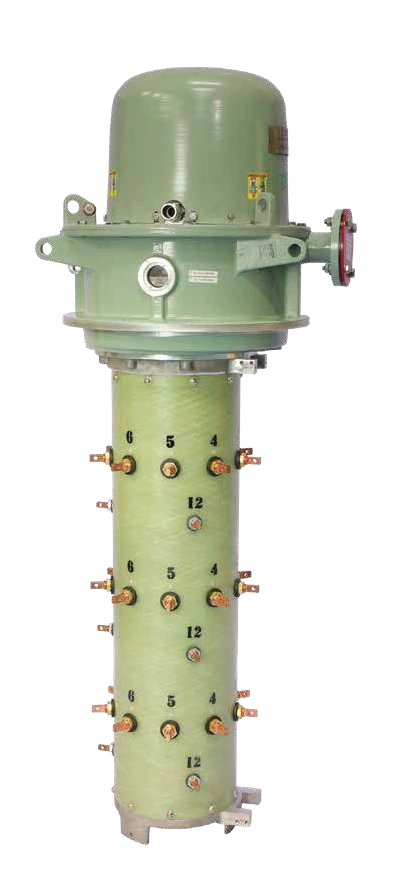
A DETC changes taps only when the transformer is switched off and isolated. It is a simpler, more economical device with no arc-switching duty, because no current flows during the change.
How it’s used: taps are set during commissioning or occasional planned adjustments to match a relatively stable supply voltage. Once set, the tap position typically stays fixed for long periods.
Strengths:
- Simple, robust, and low cost
- Minimal maintenance, since there’s no switching under load
- No arcing, so no oil contamination from tap operations
Limitations:
- The transformer must be de-energized to change taps
- Cannot respond to voltage fluctuations in real time
- Not suited to networks where voltage varies frequently
DETCs are common on distribution transformers and any application where the voltage profile is stable and adjustments are rare.
What is an OLTC (On-Load Tap Changer)?
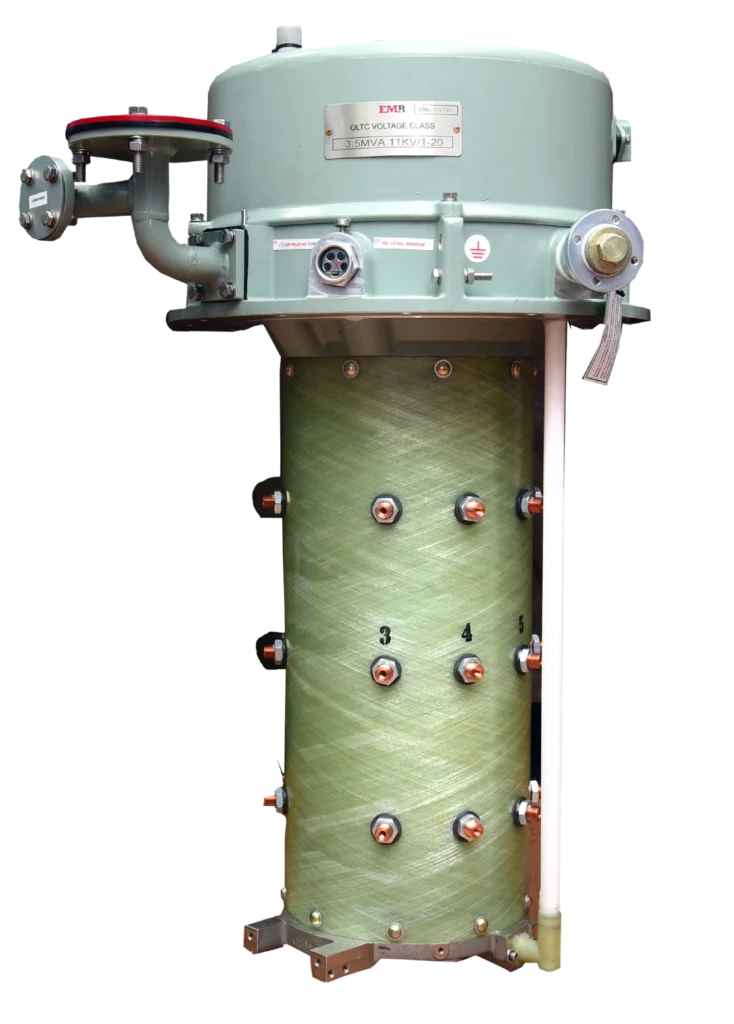
An OLTC changes taps while the transformer stays energized and carries load without interrupting supply. To do this without a break in current, it uses transition impedance and a fast diverter mechanism that momentarily bridges taps, drawing a controlled arc during the switch.
How it’s used: the OLTC operates automatically, often many times a day, continuously regulating output voltage as load and source conditions change.
Strengths:
- Regulates voltage in real time, with no supply interruption
- Essential for networks with variable load or fluctuating source voltage
- Enables automatic voltage control and integration with monitoring systems
Considerations:
- More complex, with contacts that switch under load
- Requires periodic maintenance the arcing that makes on-load switching possible also degrades the oil and wears contacts over time, which is why DCRM testing and oil filtration matter
- Higher initial cost than a DETC
OLTCs are standard on power transformers and any application where voltage must be held steady continuously.
DETC vs OLTC: side-by-side
| Factor | DETC (De-Energized) | OLTC (On-Load) |
| Transformer status during tap change | Must be de-energized | Stays energized, on load |
| Voltage regulation | Manual, occasional | Automatic, continuous |
| Arcing during switching | None | Yes (by design) |
| Complexity | Simple | More complex |
| Maintenance need | Minimal | Periodic (oil, contacts, DCRM) |
| Cost | Lower | Higher |
| Best suited to | Stable voltage, rare changes | Variable load, frequent regulation |
How to choose the right tap changer
The decision comes down to how often, and how quickly, your transformer needs to adjust its voltage.
Choose a DETC when:
- The supply voltage is stable and predictable
- Tap adjustments are infrequent and can be planned
- Simplicity and low cost are priorities
- The transformer can tolerate being taken offline for the rare adjustment
Choose an OLTC when:
- Load or source voltage fluctuates through the day
- Supply cannot be interrupted to adjust voltage
- Automatic, continuous voltage regulation is required
- The transformer is a critical grid or industrial asset
In practice, many transformers carry both: an OLTC for continuous regulation and a DETC for coarse, one-time ratio setting. The right combination depends on the network, the load profile, and how tightly voltage must be held.
The bottom line
The DETC vs OLTC choice is really a question about voltage stability. If your voltage is steady and adjustments are rare, a DETC delivers simplicity and low maintenance. If your voltage fluctuates and the supply must stay uninterrupted, an OLTC is the only option that can keep pace with the trade-off that it needs proper upkeep to stay reliable. Matching the tap changer to the application from the start avoids both over-investing in regulation you don’t need and under-specifying for a network that demands it.
EMR manufactures both OLTC and DETC solutions for power transformers and distribution transformers. If you’re unsure which configuration fits your application, EMR’s team can help specify the right tap changer for your load profile and network.
Frequently Asked Questions
What is the main difference between a DETC and an OLTC?
A DETC changes taps only when the transformer is switched off, while an OLTC changes taps while the transformer stays energized and carries load. The OLTC can regulate voltage continuously; the DETC is for occasional, planned adjustments.
Why does an OLTC need more maintenance than a DETC?
Because the OLTC switches contacts under load, each operation draws an arc that degrades the oil and wears the contacts over time. A DETC has no arcing, so it needs far less maintenance.
Can one transformer have both a DETC and an OLTC?
Yes. Many transformers use a DETC for coarse, one-time ratio setting and an OLTC for continuous automatic voltage regulation. The combination depends on the application.
Is an OLTC always better than a DETC?
No it depends on the need. If voltage is stable and adjustments are rare, a DETC is simpler, cheaper, and lower maintenance. An OLTC is only necessary where voltage must be regulated continuously without interrupting supply.
Which tap changer is used in distribution transformers?
Distribution transformers often use a DETC where the voltage profile is stable, though OLTCs are used where continuous regulation is needed. The right choice depends on the network and load behavior.